Advanced Wildlife Veterinary Treatment Course

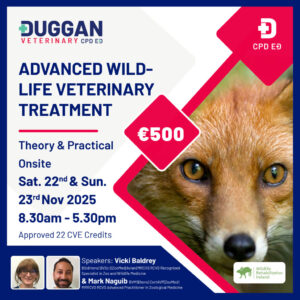
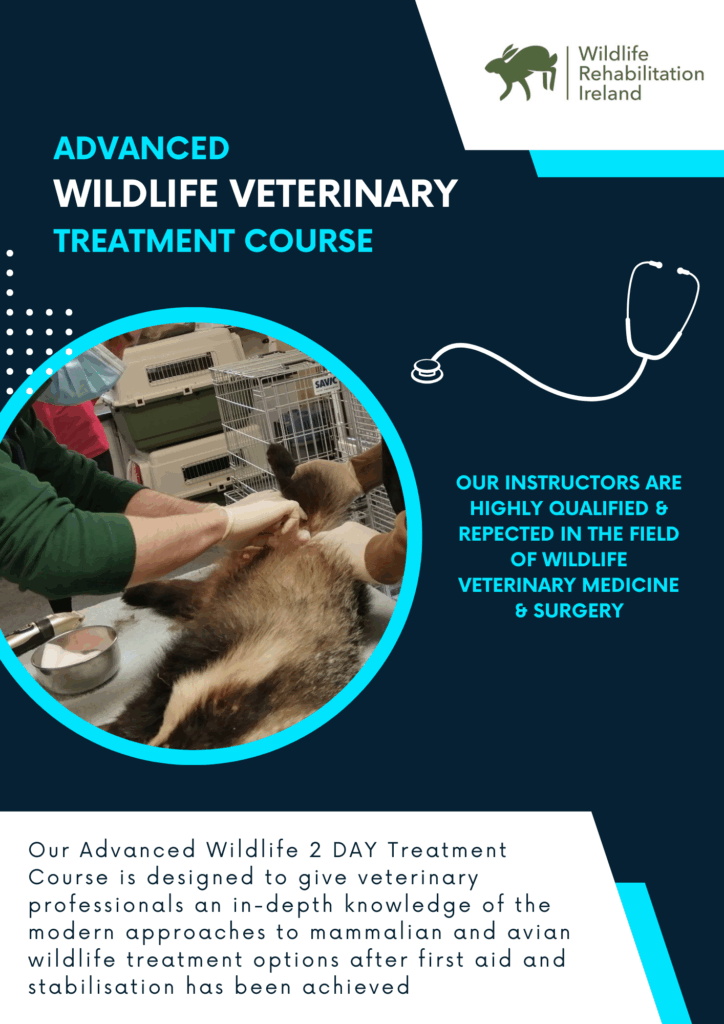
Enhance your clinical skills with WRI’s two-day Advanced Wildlife Veterinary Treatment Course. Gain practical training in wildlife assessment, diagnostics, anaesthesia, treatment planning, and case management.

Wildlife Veterinary Treatment

WRI is delighted to present our 2 Day Advanced Wildlife Veterinary Treatment

Introductory Summary

This VCI-accredited Advanced Wildlife Veterinary Treatment Course equips veterinary professionals with the skills and confidence needed to assess, stabilise, and treat injured or orphaned wild animals. Led by experienced wildlife clinicians, the course explores veterinary obligations in wildlife emergencies, key differences between treating domestic and wild species, and best-practice approaches to anaesthesia, soft-tissue and fracture management, and clinical decision-making. Through lectures, case discussions, and hands-on practical sessions using Irish wildlife species, participants learn essential handling techniques, bandaging, gavage, peritoneal and intraosseous fluid therapy, and species-specific examination and treatment considerations. Designed for both vets and vet nurses, the course strengthens the vital role veterinary practitioners play in wildlife welfare and supports effective collaboration with rehabilitators to improve outcomes for Ireland’s native wildlife.

Day 1 Programme

Day 1

8:30 AM – 9:00 AM
Registration & coffee

9:00 AM – 10:45 AM
Legal and ethical obligations, Rehabilitator responsibilities, History, Clinical examination

10:45 AM – 11:00 AM
Comfort Break

11:00 AM – 12:15 PM
Euthanasia, Diagnostics, Basic treatments

12:15 PM – 1:00 PM
Lunch

1:00 PM – 3:00 PM
Skills and Practical; Session 1 (on cadavers)

3:00 PM – 3:20 PM
Coffee Break

3:20 PM – 4:50 PM
Skills and Practical; Session 2 (on cadavers)

4:50 PM – 5:30 PM
Review and discuss the activities
 

Day 2 

8:30 AM – 9:00 AM
Coffee

9:00 AM – 10:45 AM
Common conditions; waterbirds, raptors, passerines, mammals, Case studies, Zoonoses

10:45 AM – 11:00 AM
Comfort Break

11:00 AM – 12:15 PM
Anesthesia, Orthopedics, Nutrition and housing, Release

12:15 PM – 1:00 PM
Lunch

1:00 PM – 3:00 PM
Skills and practicals; Session 3 (on cadavers)

3:00 PM – 3:20 PM
Coffee

3:20 PM – 4:50 PM
Skills and practicals; Session 4 (on cadavers)

4:50 PM – 5:30 PM
Quiz and final discussion, Feedback forms and farewell
Fees

Fees

Veterinary Nurses / Veterinary Surgeons (MVB) – 
 

Funding may be available for delegates — please contact us to find out if you are eligible.


WRI Grant Assistance

One of the aims of WRI is to offer support to those caring for wildlife.
WRI grants are mainly given for capital projects, equipment, veterinary fees, or attendance
at educational events. However, each application is considered on a case-by-case basis.
More grant information is available here.

For a WRI grant application form or more information, please contact us at
enquiries@wri.ie

Advanced Wildlife Veterinary Treatment Course Report

2016 Course Review

On September 25th in Ashbourne Co Meath, vets and vet nurses attended a day course hosted by Wildlife Rehabilitation Ireland on Advanced Wildlife Treatment for Veterinary Professionals. The course was accredited by the Veterinary Council of Ireland. Presented by David Couper MRCVS, and Kieran Corry MVB.

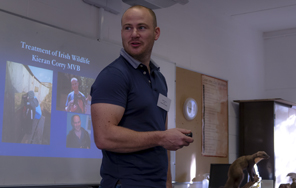
Kieran Corry MRCVS introduced himself as a small animal vet who treats wildlife. He initially intended to become a marine mammal vet but after realising that marine mammal veterinary meant either research or working at Sea World, he changed his mind. He has a particular interest in orthopaedic and soft tissue surgery but has a passion for working with wildlife when it comes his way. He now works in Campsie Vet Centre in Tyrone in Northern Ireland.
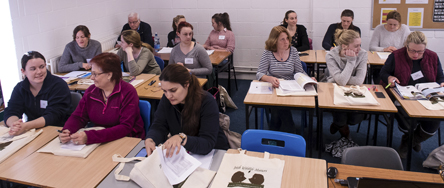
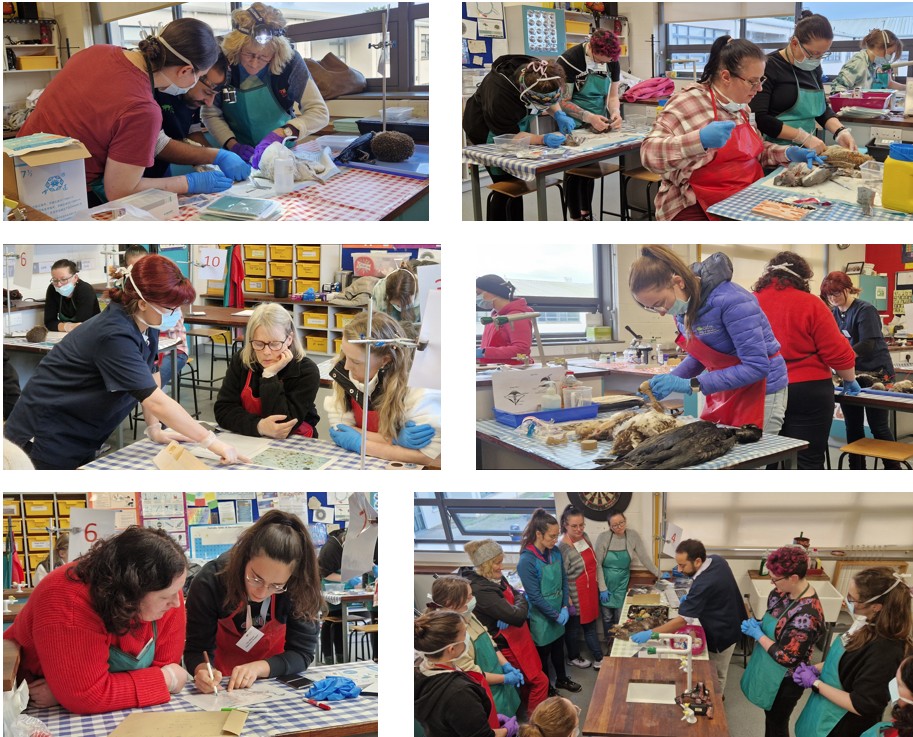
Course photo

Kieran spoke about Veterinary obligations around treating wildlife and reminded veterinary professionals that they are obligated to attend to a wildlife casualty in an emergency even though it might just be in the form of providing first aid, then ideally they refer the animal to a wildlife rehabilitator.

He also spoke about rehabilitators’ responsibilities to casualties and the differences between treating and caring for wildlife versus domestic animals.

For severely injured wildlife, managing soft tissue injuries was discussed.

The morning continued with lots of great advice on treatments and handling, and two comprehensive lectures on anaesthesia and fracture management which included anaesthesia techniques and considerations, advanced orthopaedic conditions in wildlife, treatment options for these conditions, and post-operative care.
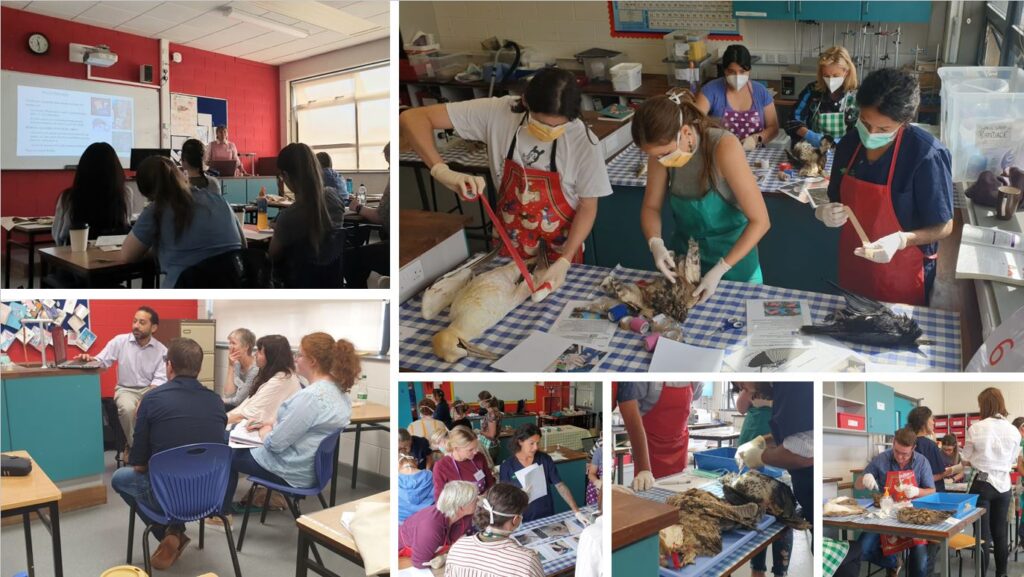
Lecture photo

Following on from Kieran’s lectures, David Cooper MRCVS spoke about the importance of a veterinary examination and history taking when presented with a casualty.

David is the wildlife veterinary officer at the Royal Society for the Prevention of Cruelty to Animals (RSPCA) West Hatch Wildlife Centre in the UK for the past 13 years, where he mainly works with native wildlife.

West Hatch has excellent wildlife rehabilitation facilities with enclosures specifically designed for housing wildlife, and a fully equipped veterinary examination room and operating theatre.

The Centre treats thousands of animals from Southern England every year.

After his lecture on history taking and clinical examination, he went on to speak about common conditions of waterfowl, raptors, passerines and mammals.

Fishing tackle injuries, lead toxicity, and developmental conditions such as ‘angel wing’, were among the most common conditions he encounters.
Lecture photo

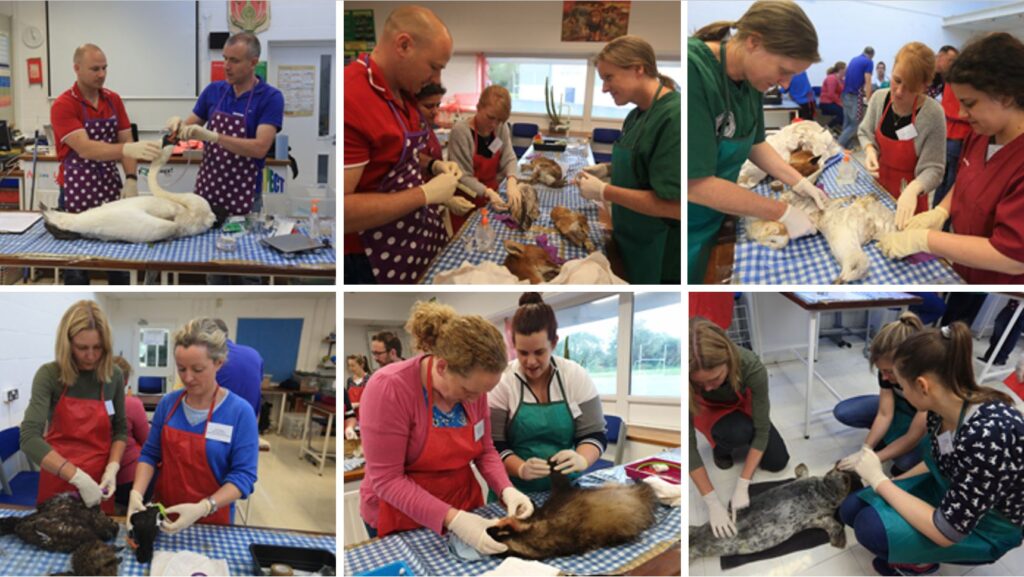
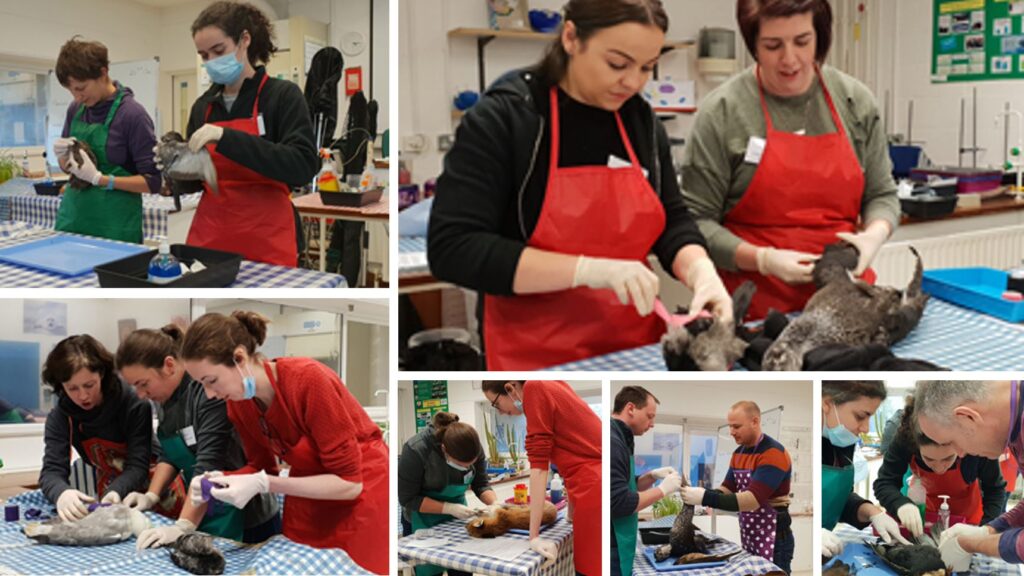
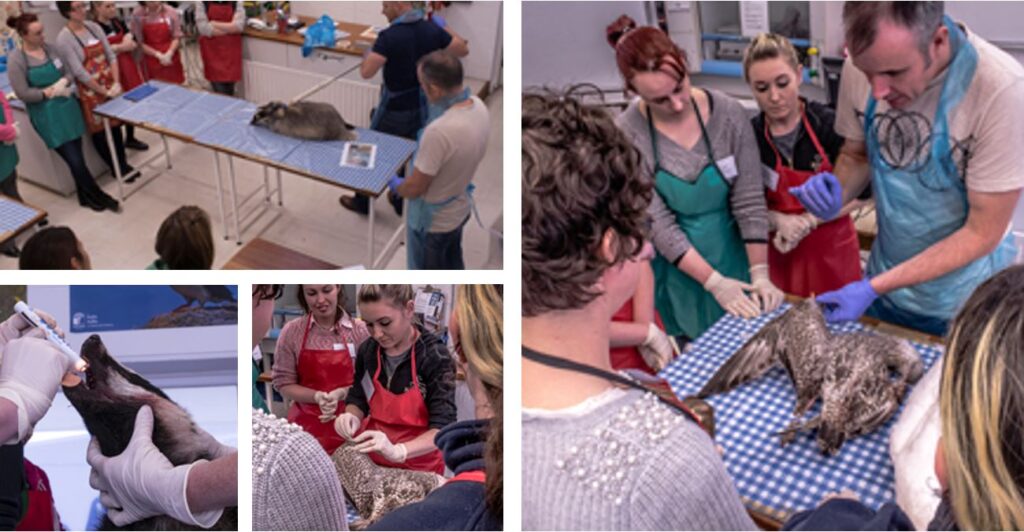
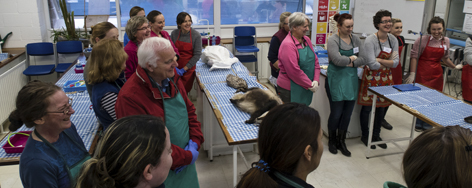
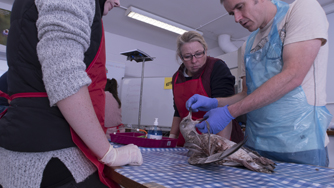
After lunch, there were practical sessions so the vets and vet nurses could gain hands-on experience in handling techniques and clinical examination of a selection of our Irish wild birds, bats and other large mammals. This included applying wing bandages, gavaging birds, and the more specialised veterinary techniques such as peritoneal and intraosseous fluid therapy, fracture repair and management.

Both of the course instructors; David and Kieran, are experts in the field of wild animal management so the vet and vet nurse delegates were given a great insight into the handling, capture and restraint of wild animals. The delegates were then given the opportunity to practice all the techniques shown by the instructors.

As the class was split up into small groups, the instructors were able to easily give plenty of individual attention to each delegate. Many vets and nurses had different species-specific interests which were excellently addressed by each instructor.
Lecture photo

The vets and vet nurses who attended this course went away with a greater understanding of just how important their role is when dealing with wildlife, and that of history taking from the member of the public who brings the casualty to them for treatment.

Vet clinics sometimes see wildlife casualties as something they wish they could avoid, but practices that treat injured and orphaned wildlife are highly respected and admired by their clients and the public, which in turn; via social media and word of mouth, increases their client numbers.

These practices benefit by being identified as compassionate and caring to all animals, clients trust these practices more, and hence have greater confidence in them should their own domestic animals need help.

A WRI survey published in the Veterinary Journal (‘Wildlife seen, treatment and outcomes in Irish veterinary hospitals and clinics’) highlighted the role veterinarians play in wildlife conservation — over 3000 casualties were brought into Irish clinics in a single year.

Encouragingly, there are more and more veterinary practices willing to help wildlife and referring wildlife calls to experienced wildlife rehabilitators for advice. As awareness of the Irish Wildlife Matters website
www.irishwildlifematters.ie
increases, so too does the number of casualties referred to these rehabilitators for ongoing care following the provision of veterinary first aid and stabilisation treatment.

For more details on upcoming courses join WRI’s mailing list.

Venue

TBC for 2026

Delegate Testimonials

November 2025

November 2024

“I feel so much more confident to accept wildlife into my clinic now. Wonderful teachers.”
“So informative, this has been a very valuable weekend!.
“Brilliant Course. Very intensive. Have learned lots. Highly recommend to anyone who would like to get a bit more confident with dealing with wildlife!.
“Approachable knowledgeable speakers. Very practical and useful information.
“Very enjoyable and highly practical.
“Loved the course and learned so much!
 
 
August 2022
“Speakers were incredibly knowledgeable and keen to have discussions and engage with everyone on the course.
“Extremely educational content well presented by exceptional speakers. Practical element enhanced theory.
“Thank you for your dedication to our wildlife.
“Very informative, great to give an overview of wildlife medicine and make you feel confident knowing what to do if wildlife shows up in your consultation room.
“Excellent overall really enjoyed the two days.
“Wildlife needs our help.
“Fun learning with passionate people while building a awesome wildlife network.
 
 
June 2019
“Very interesting, very relevant, presented by enthusiastic and knowledgeable people! Great!.
“Lovely bunch of people running this course and great contacts to have for future wildlife advice.
“Useful, practical and well presented!
“A crash course in wildlife veterinary providing all the resources to leave you confident in your ethical treatment plan
“Learned loads, ate loads – left satisfied.
“An in-depth experience into the clinical treatment of Irish wildlife
“As a vet when a wildlife animal arrives in your practice you often feel alone, useless, unprepared. This course will give you the confidence for not to euthanase without proper reason
“It was very informative and enjoyable to partake in
“Well worth doing making excellent contacts for the future
“An informative and enjoyable day of learning
“A great overview on treating a variety of wildlife in a compassionate and practical capacity
 
 
October 2018
“I enjoyed the whole learning experience and would recommend it to any practitioner having an interest and seeing wildlife in practice.
“Ideal to understand what you have to face if you don’t have experience with wildlife medicine.
“Great opportunity to learn and practice clinical skills.
“Covered everything that I expected in a very relaxed but informative manner.
“Excellent and interesting course that provides easy to apply theory and practical skills to implement in everyday veterinary practice.
“Understandable even for VN students. Very useful.
“Great day to learn and meet likeminded professionals.
“Great coverage of topics related to all areas of wildlife rehab.
“Fantastic course – a must for all vet students and graduates wanting to work with wildlife.
“Very comprehensive and useful for vets/VNs in first opinion practice.
“Very enjoyable.
“The course was excellent and really helped to further my knowledge on treating wildlife. Would highly recommend.
 
 
September 2016
“Practical, detailed, in-depth information to further your wildlife knowledge.
“Great to get hands on experience.
“Enjoyable learning alongside likeminded, passionate, altruistic people
“It is always a pleasure to meet nice people that put such an effort together because wildlife matters.
“You get used to the smell after a while!
“As ever a fab weekend on this important topic and it’s very encouraging to see so many professionals willing to help and support wildlife rehabbers.
“Super wildlife course!


Hear from our supporters

Our clients love working with us, just read what they have to say!

“Lorem ipsum dolor sit amet, consectetur adipiscing elit, sed do eiusmod tempor incididunt ut labore et dolore magna aliqua. Ut enim ad minim veniam, quis nostrud.”

First and Second Name

Role | Company

“Lorem ipsum dolor sit amet, consectetur adipiscing elit, sed do eiusmod tempor incididunt ut labore et dolore magna aliqua. Ut enim ad minim veniam, quis nostrud.”

First and Second Name

Role | Company

“Lorem ipsum dolor sit amet, consectetur adipiscing elit, sed do eiusmod tempor incididunt ut labore et dolore magna aliqua. Ut enim ad minim veniam, quis nostrud.”

First and Second Name

Role | Company